
Wine storage · 6 min read
Why a Sub-Zero wine column drifts warm in Campbell
A Sub-Zero wine column that creeps above its set point in Campbell is usually airflow, a dual-zone sensor or the sealed system — not the bottles. How it's diagnosed locally.
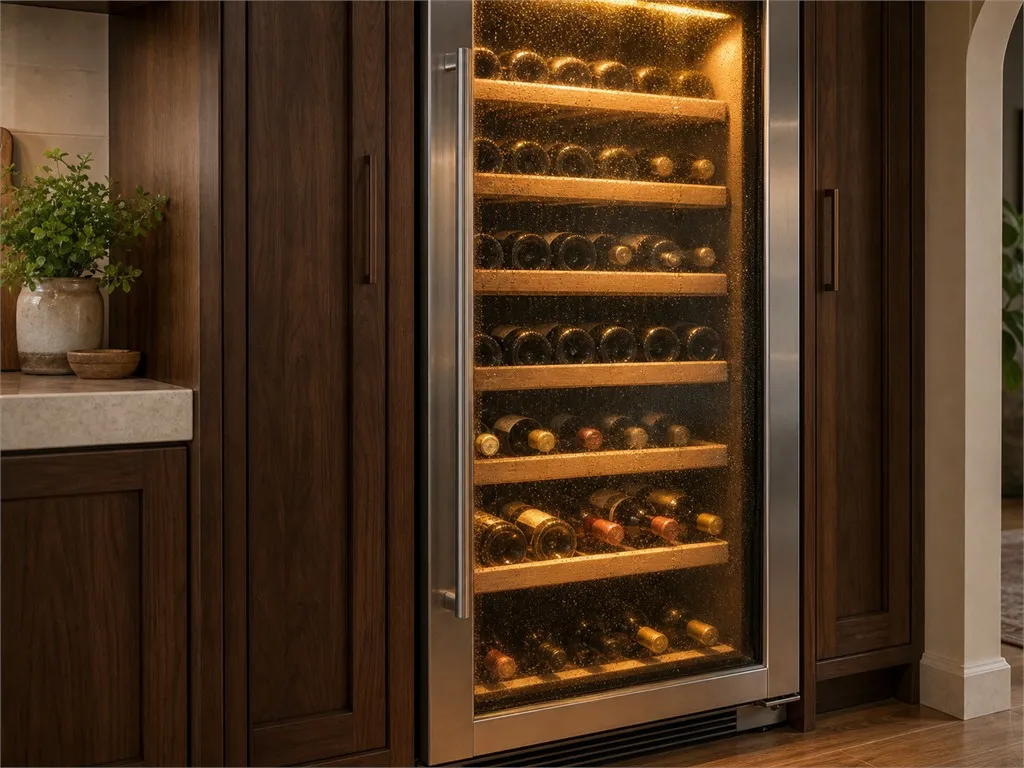
A Campbell wine collection rarely sits idle. Between the Santa Cruz Mountains tastings up Highway 17 and the bottles people bring home from Saratoga and Los Gatos, a built-in Sub-Zero wine column here is usually working storage, not a showpiece — and that is exactly when a slow warm drift matters most.
Sub-Zero builds proper built-in wine storage, with a sealed refrigeration system and per-zone control, so when a zone climbs two or three degrees above its set point the cause is almost never the wine. It is one of a short list of repairable faults, and the order you check them in matters.
Dual-zone control and why one zone wanders
Most Sub-Zero wine units run two independent zones — a cooler reds zone over a colder whites or sparkling zone — each with its own thermistor and its own damper or evaporator feed. A single drifting zone while the other holds steady is the classic signature of a failing zone sensor: the control reads a temperature that is a few degrees off reality, so it stops cooling early and the zone settles warm.
We confirm this with an independent probe against the displayed reading before touching anything. A sensor that reads high is a clean, bounded swap with a genuine OEM part; replacing the whole control on a guess is the mistake we see most often.
Airflow, the condenser and Campbell's summer load
A wine column rejects its heat through a condenser, and in a built-in that condenser breathes through a tight grille. Campbell summers run dry and warm, and homes near the Pruneyard and off Campbell Avenue pull plenty of fine dust and pet hair into that grille over a year. A loaded condenser makes the compressor run long and still lose ground on the hottest afternoons — a whole-cabinet warm drift rather than a single zone.
Inside, a tired evaporator fan or a frosted evaporator coil starves the cabinet of cold air the same way. We clean and read airflow first, because a five-minute condenser clean has saved more than one Campbell owner an unnecessary parts bill.
Seals, UV glass and the things that quietly load the system
Wine columns live or die on a tight cabinet. The door gasket and the seal around the UV-tinted glass are there to keep humid Santa Clara Valley air out; once a gasket hardens or a glass seal weakens, warm air leaks in, the unit runs constantly, and you may see condensation or a faint frost line. That extra load eventually shows up as drift.
Vibration is the other quiet enemy specific to wine. A worn fan bearing or a compressor mount transmitting buzz will agitate sediment in older bottles long before it trips any alarm — so a wine unit that has started to hum is worth looking at even if the temperature still looks fine.
When it's the sealed system, and repair vs. replace
If the sensors read true, airflow is clear and the seals are sound but a zone still will not hold, we put gauges on the sealed system. A slow refrigerant leak or a weakening compressor is the one expensive failure, and on a built-in wine column we show you the pressures before recommending anything.
Most of the faults above — sensor, fan, gasket, condenser, control — are firmly worth repairing on a cabinet-matched Sub-Zero. We will only steer you toward replacement when an aging unit's sealed-system numbers stop justifying the cost, and we would rather lose the job than sell a repair that does not add up. The $89 service call covers that diagnosis and is waived when you book the repair, with a 365-day warranty on the labor.
FAQ
Questions & answers
Why is only one zone of my Sub-Zero wine cooler warm?
A single warm zone while the other holds is the textbook sign of a failing zone temperature sensor. The control reads a few degrees off and stops cooling early. We verify it against an independent probe before replacing the sensor with a genuine OEM part.
Can a dusty grille really warm up a wine column?
Yes. The condenser breathes through a tight built-in grille, and Campbell's dry summers load it with dust and pet hair. A clogged condenser makes the compressor run long and lose ground on hot afternoons — a whole-cabinet drift that often clears with a simple cleaning.
Is a Sub-Zero wine cooler worth repairing?
Almost always for sensor, fan, gasket, condenser or control faults on a cabinet-matched built-in. The one closer call is the sealed system — a refrigerant leak or weak compressor — where we show you the gauge readings before recommending repair or replacement.
Rather leave it to a Sub-Zero specialist?
Book online or call and we'll diagnose it properly before any parts are quoted. The $89 service call is waived when you book the repair.
$89 service call, waived when you book the repair. 365-day warranty on all labor. We install genuine OEM Sub-Zero parts.
596 reviews · 4.9 / 5