
Local guide · 5 min read
Campbell hard water and your Sub-Zero ice maker
Santa Clara Valley hard water scales up Sub-Zero fill valves and ice molds faster than the manual assumes. What slow, hollow Campbell cubes really mean.
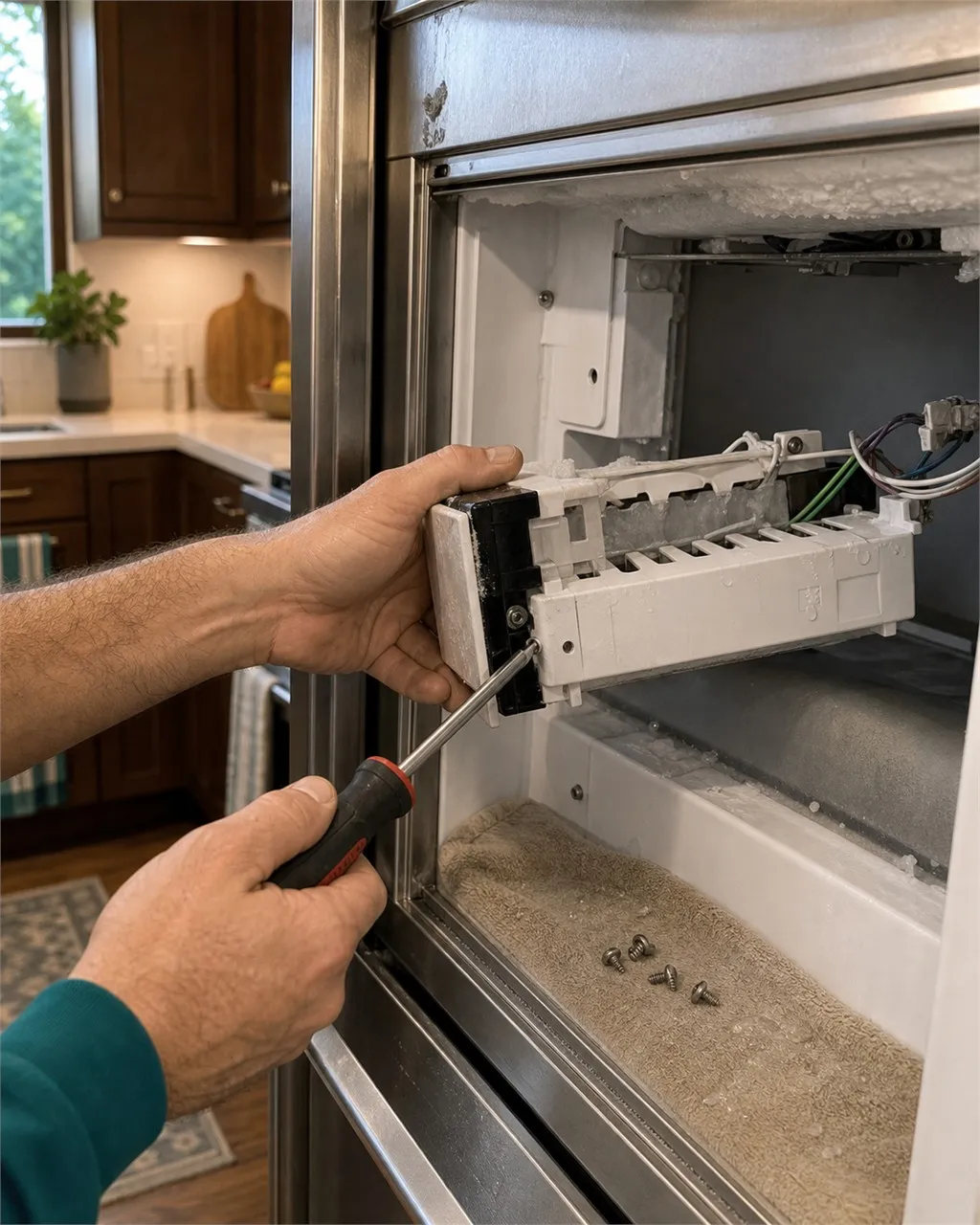
If your Sub-Zero used to drop clear, full cubes and now gives you small, cloudy or hollow ones, the cause in a Campbell kitchen is usually sitting in your water rather than in the ice maker itself.
Santa Clara Valley water runs hard, and that single local fact quietly drives most of the ice-maker calls we take across Downtown Campbell, San Tomas and the Cambrian-adjacent streets.
What hard water does to a Sub-Zero ice maker
Hard water carries dissolved minerals that drop out as scale wherever water sits or warms. In a Sub-Zero that means three places age faster than the spec sheet assumes: the water inlet valve, the fill tube, and the ice mold itself.
Scale on the inlet valve throttles the flow, so each batch fills short — that is your hollow cube. Scale in the fill tube can freeze into a partial blockage overnight. And mineral film on the mold keeps cubes from releasing cleanly, which is why they come out cracked or stuck together. None of that is a failed control board, even though the symptom looks dramatic.
The filter is your first line of defense
The internal water filter is the cheapest part of this whole system and the one Campbell owners stretch the longest. On valley water we tell people to treat the 6-to-12-month interval as a ceiling, not a target — closer to six months if the ice is already slowing. A spent filter passes more minerals downstream, so a tired filter and hard water compound each other.
Changing it is a two-minute job and it is the first thing to rule out before anyone talks about parts.
When it is the valve or the module, not the water
If the ice is still poor a few weeks after a fresh filter, we put it on the bench properly: check the inlet-valve flow rate, inspect the fill tube for a frozen plug, and confirm the mold heater and ejector are cycling. A scaled inlet valve gets replaced with a genuine OEM part; a flooded or starved mold gets traced to its real cause rather than swapped on a guess.
The $89 service call covers that diagnosis and is waived when you book the repair, and the labor carries a 365-day warranty. For the full symptom-by-symptom checklist — no ice at all, slow or hollow cubes, a stuck arm and water-line leaks — see our Sub-Zero ice maker troubleshooting page.
FAQ
Questions & answers
Why does my Sub-Zero make small or hollow ice in Campbell?
Almost always hard-water scale restricting the fill. Santa Clara Valley water leaves mineral deposits on the inlet valve and fill tube, so each batch fills short. Start with a fresh water filter before assuming a part has failed.
How often should I change the water filter on valley water?
Closer to every six months than twelve in most Campbell homes. Hard water clogs filters faster than the manual's average, and a spent filter passes more minerals to the ice maker and dispenser.
Is cloudy ice a sign something is broken?
Not by itself — cloudiness is mostly dissolved minerals and trapped air, which valley water makes worse. Slow production, hollow cubes or cubes that stick together are the signs worth a closer look.
Rather leave it to a Sub-Zero specialist?
Book online or call and we'll diagnose it properly before any parts are quoted. The $89 service call is waived when you book the repair.
$89 service call, waived when you book the repair. 365-day warranty on all labor. We install genuine OEM Sub-Zero parts.
596 reviews · 4.9 / 5